Content Menu
● Mexico’s Position In The Gas Pressure Regulator Supply Chain
>> Where Are The Relevant Industrial Concentrations?
>> What Does The Latest Available Evidence Show?
● Selection Criteria: How These Suppliers Were Evaluated
● 1. Zhejiang Bril Welding Equipment Co., Ltd.
>> A Factory-Direct OEM Alternative For Mexican Importers
>> Core Strengths And Product Fit
>> OEM/ODM Scope And Buyer Considerations
>> A Mexico-Based Supply Partner For Welding And Gas Procurement
>> Core Strengths And OEM/ODM Limitations
>> An Established Brand For Industrial Pressure Regulation
>> Core Strengths And Purchasing Fit
>> A Strong Candidate For Branded Oxy-Fuel Equipment Programs
>> Core Strengths And Technical Differentiation
>> A Local Channel For Industrial And Specialty Gas Regulators
>> Core Strengths And OEM/ODM Scope
● Supplier Comparison: Capacity, MOQ, And Certification Transparency
● Technical Buying Guide: What A Reliable Regulator Specification Includes
>> Define Performance Before Comparing Prices
>> Specify Materials Rather Than “High-Quality Brass”
>> Separate Management Certification From Product Compliance
● The Often-Missed Procurement Trap: Testing Only At Full Cylinder Pressure
● How To Qualify A Supplier And Approve Samples
>> Step 1: Verify The Legal And Manufacturing Entities
>> Step 2: Approve A Controlled Sample
>> Step 3: Confirm Real Production Availability
>> Step 4: Lock The Production Specification
>> Step 5: Clarify Logistics And Import Responsibility
● Conclusion: Choose The Supply Model Before Choosing The Supplier
● FAQ
>> 1. How Can I Verify Whether A Supplier’s ISO Certificate Has Expired?
>> 2. How Can I Prove A Regulator Is Dual-Stage Rather Than Simply Dual-Gauge?
>> 3. Can One Regulator Model Cover Oxygen, Argon, CO₂, Propane, And Acetylene?
>> 4. What Should I Do If Samples Pass But A Production Batch Performs Differently?
>> 5. What Documents Should I Request For A Heated CO₂ Regulator?
Choosing a gas pressure reducing regulator supplier in Mexico requires more than comparing prices, brass body weight, or delivery promises. Professional buyers need to establish who manufactures the equipment, which tests support its performance, and whether the supplier can maintain the same specification across repeat orders.
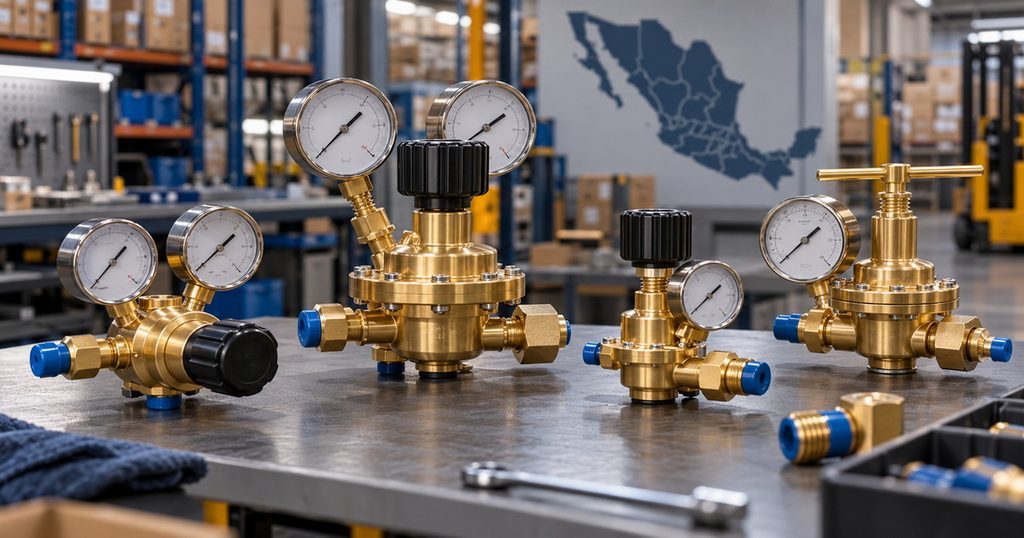
Mexico’s Position In The Gas Pressure Regulator Supply Chain
Mexico combines domestic industrial gas distribution with access to international welding and gas-control brands. That makes it useful for buyers seeking local technical support, replacement equipment, and procurement arrangements connected to gas supply.
Government trade statistics also indicate a substantial pressure-control equipment supply chain. Mexico’s Secretaría de Economía reports that trade in pressure-reducing valves under HS 848110 reached US$353 million in 2024, comprising US$226 million in exports and US$127 million in imports. The United States received US$221 million of those exports.
These figures cover pressure-reducing valves broadly. They are not a measurement of Mexico’s welding cylinder regulator market alone.
Where Are The Relevant Industrial Concentrations?
The same government dataset identifies Tamaulipas, Jalisco, San Luis Potosí, Querétaro, and Coahuila as Mexico’s leading exporting states for this product category in 2024. These locations provide useful starting points for investigating pressure-control supply chains, although export activity does not establish that a particular supplier manufactures welding regulators locally.
For buyers, the practical opportunity is to combine regional sourcing access with clear verification of manufacturing origin and product responsibility.
What Does The Latest Available Evidence Show?
The government dashboard includes 2026 observations, but its July 2026 summary labels and explanatory text reverse the import and export figures. Consequently, this guide uses the internally consistent 2024 annual figures rather than presenting the conflicting monthly values as settled facts.
A useful technical update is clearer: ISO states that ISO 2503:2009 was reviewed and confirmed in 2026 and remains current. This standard addresses cylinder-mounted regulators used in welding, cutting, and allied processes within its defined scope.
No verified 2025 or 2026 report establishing a Mexico-specific welding regulator market size was identified for this guide. Broad valve trade statistics should not be relabeled as a specialized regulator market forecast.
Selection Criteria: How These Suppliers Were Evaluated
| Evaluation Area | Evidence Buyers Should Request |
|---|---|
| Manufacturing identity | Legal entity, factory address, manufacturing origin, and processes performed internally |
| Engineering capability | Drawings, gas compatibility review, pressure specifications, and design-change procedures |
| Quality control | Material records, inspection plans, calibrated instruments, and batch-linked test results |
| Compliance | Current certificates, applicable product standards, and model-specific conformity documentation |
| Delivery reliability | Confirmed production slots, recent delivery performance, and spare-parts arrangements |
| OEM/ODM capability | Written customization scope, development responsibilities, tooling ownership, and approval milestones |
1. Zhejiang Bril Welding Equipment Co., Ltd.
A Factory-Direct OEM Alternative For Mexican Importers
– Founded: 2002.
– Manufacturing location: Wenzhou, Zhejiang, China.
– Market coverage: The company reports serving more than 30 countries and regions.
– Supplier type: Industrial gas regulator developer and manufacturer.
Bril is relevant to Mexican importers, wholesalers, and overseas brands seeking a factory-direct alternative to purchasing established branded equipment through local channels.
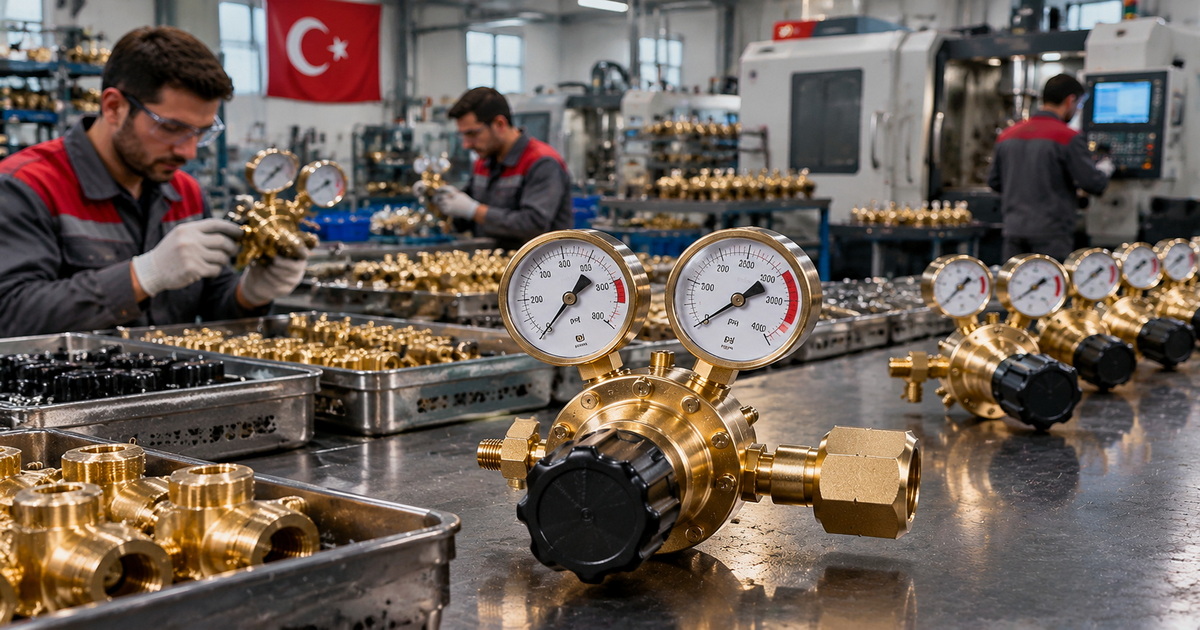
Its published company profile describes more than 200 employees, over 3,500 square meters of production area, and comprehensive testing and inspection equipment. These are company-reported indicators of manufacturing resources, not independently verified monthly output figures.
Core Strengths And Product Fit
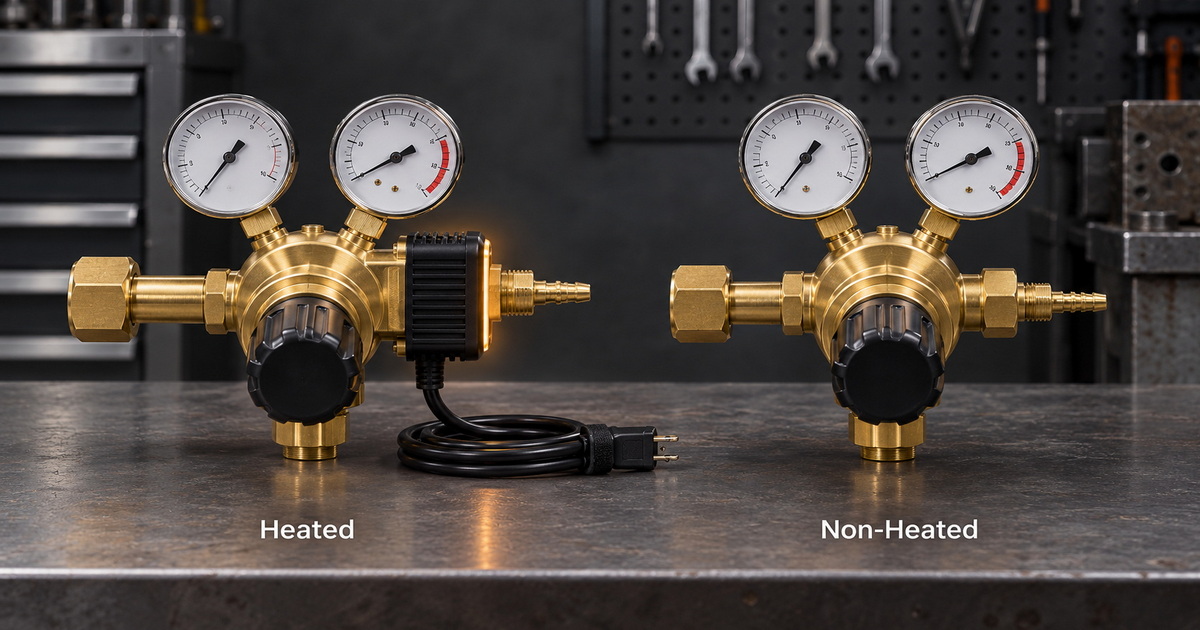
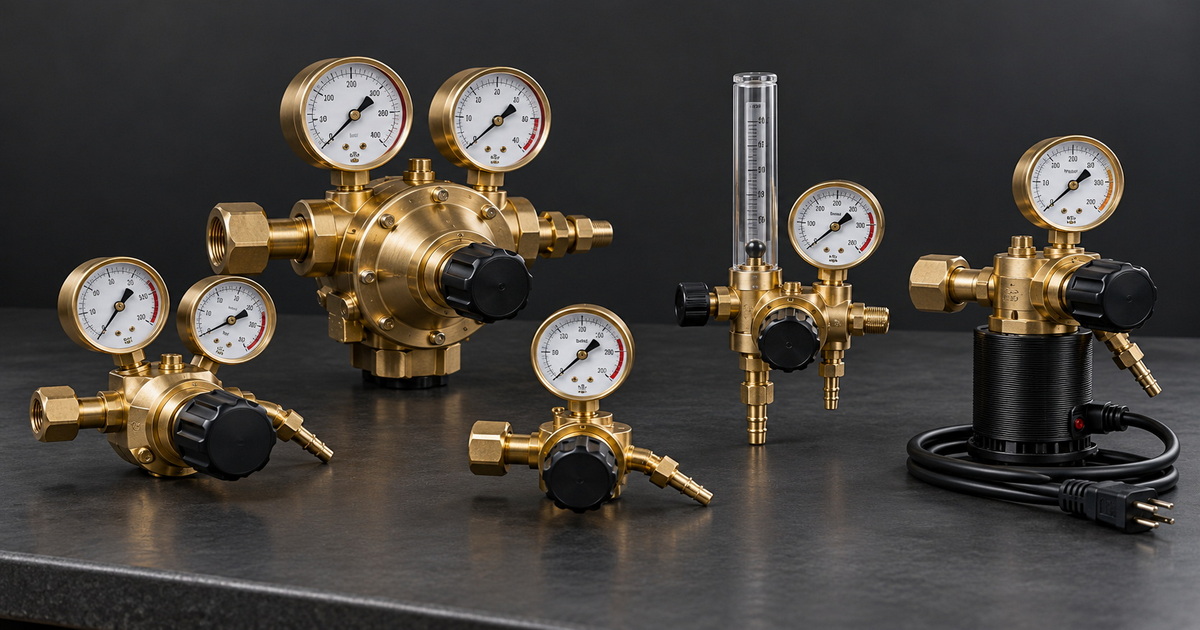
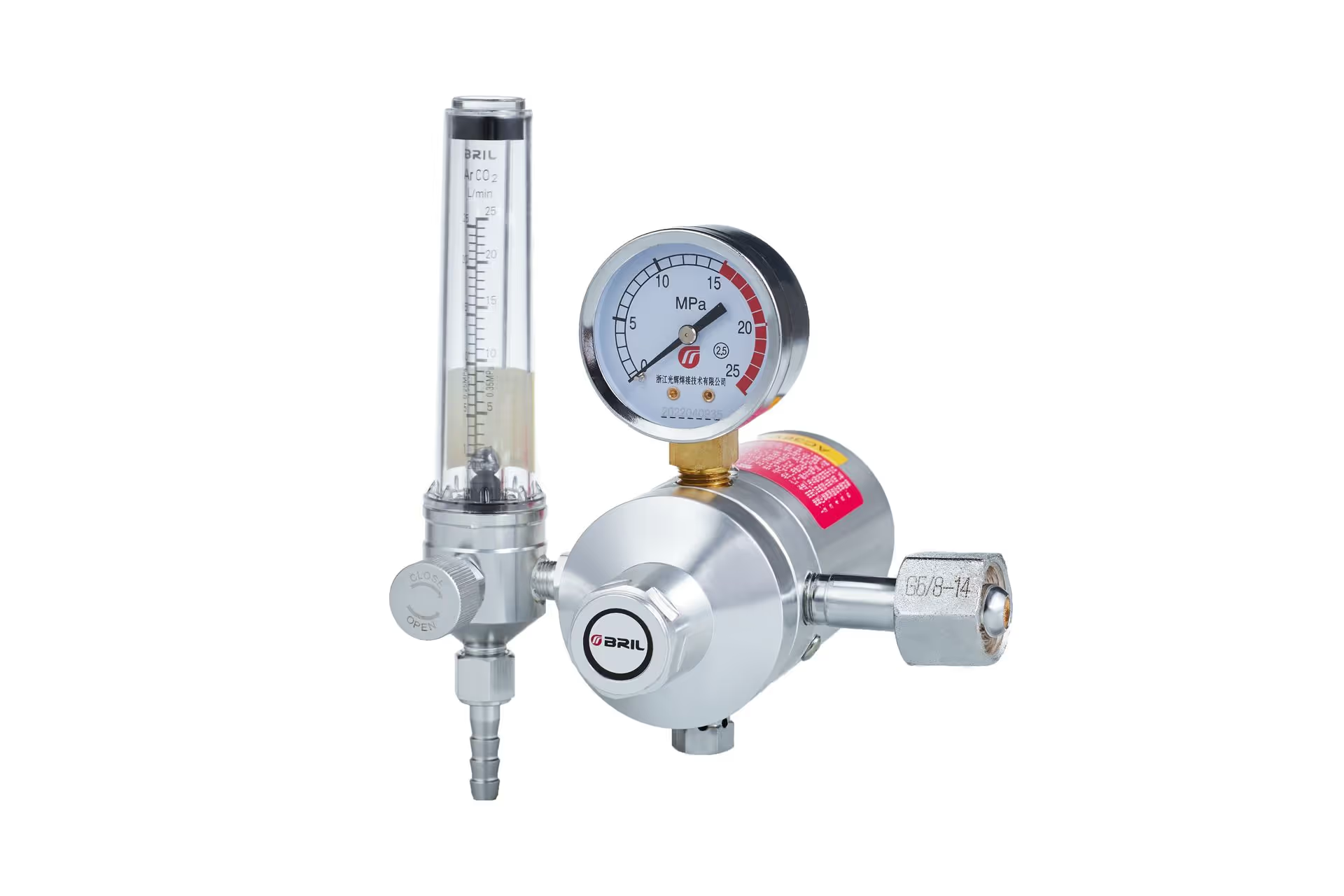
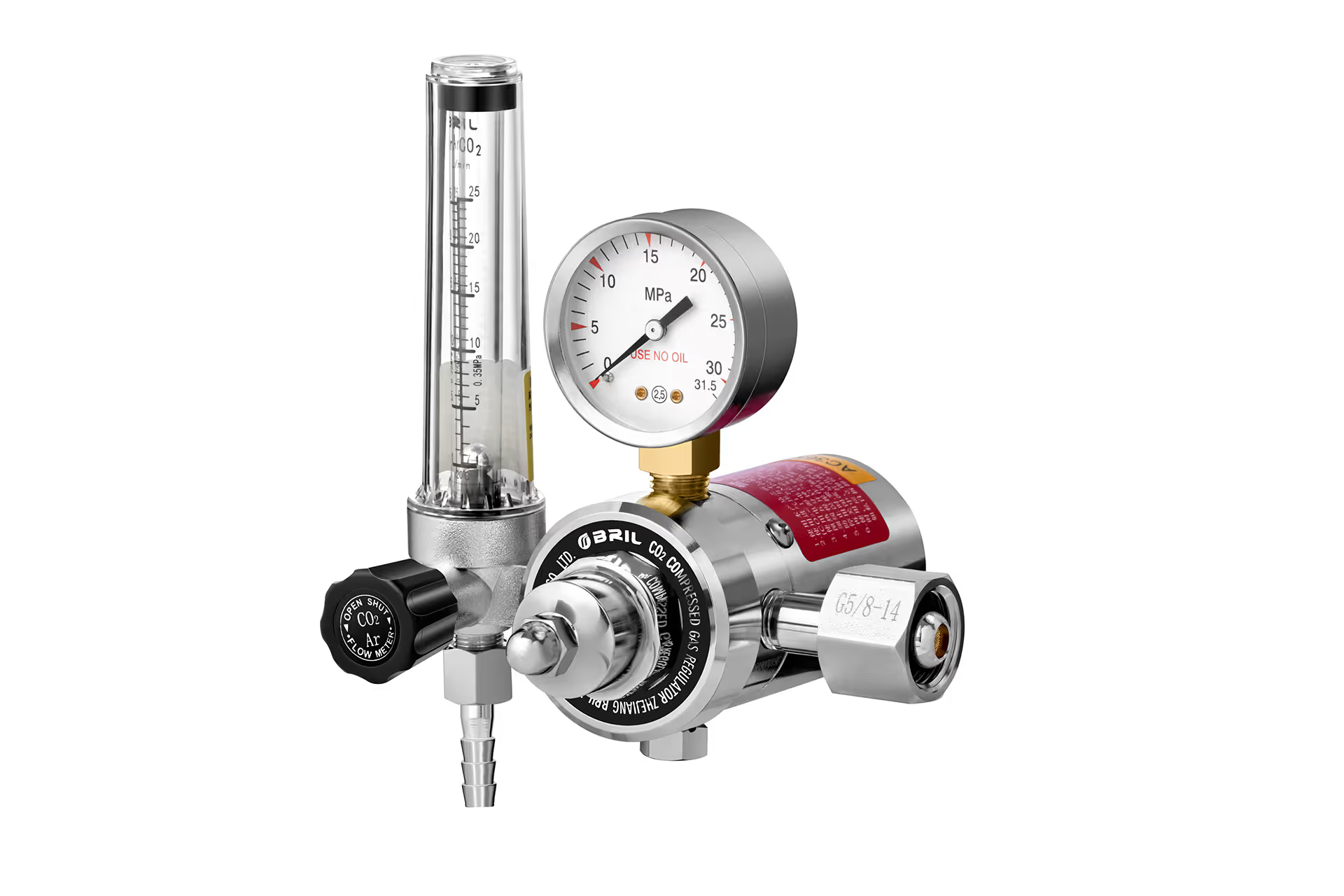
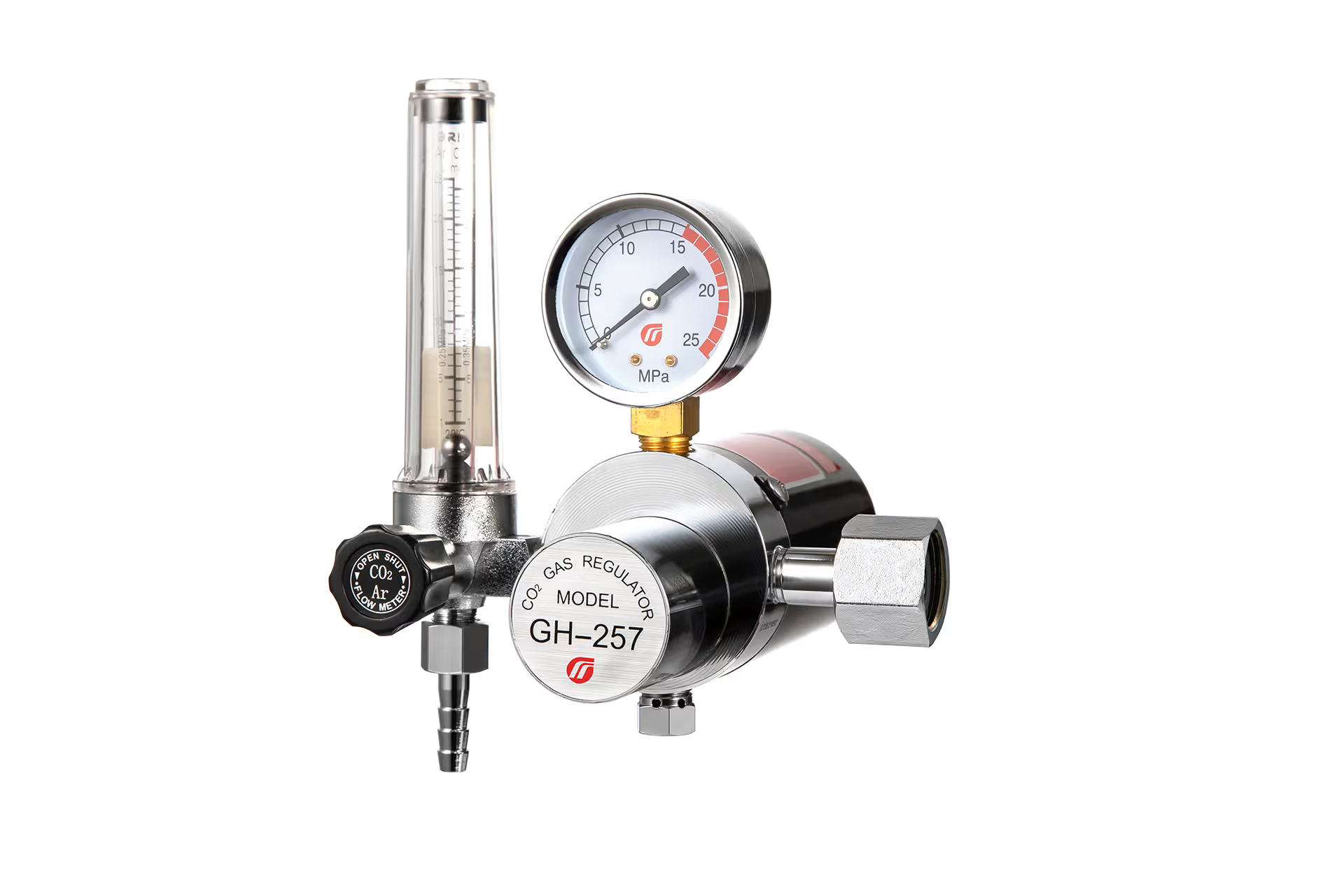
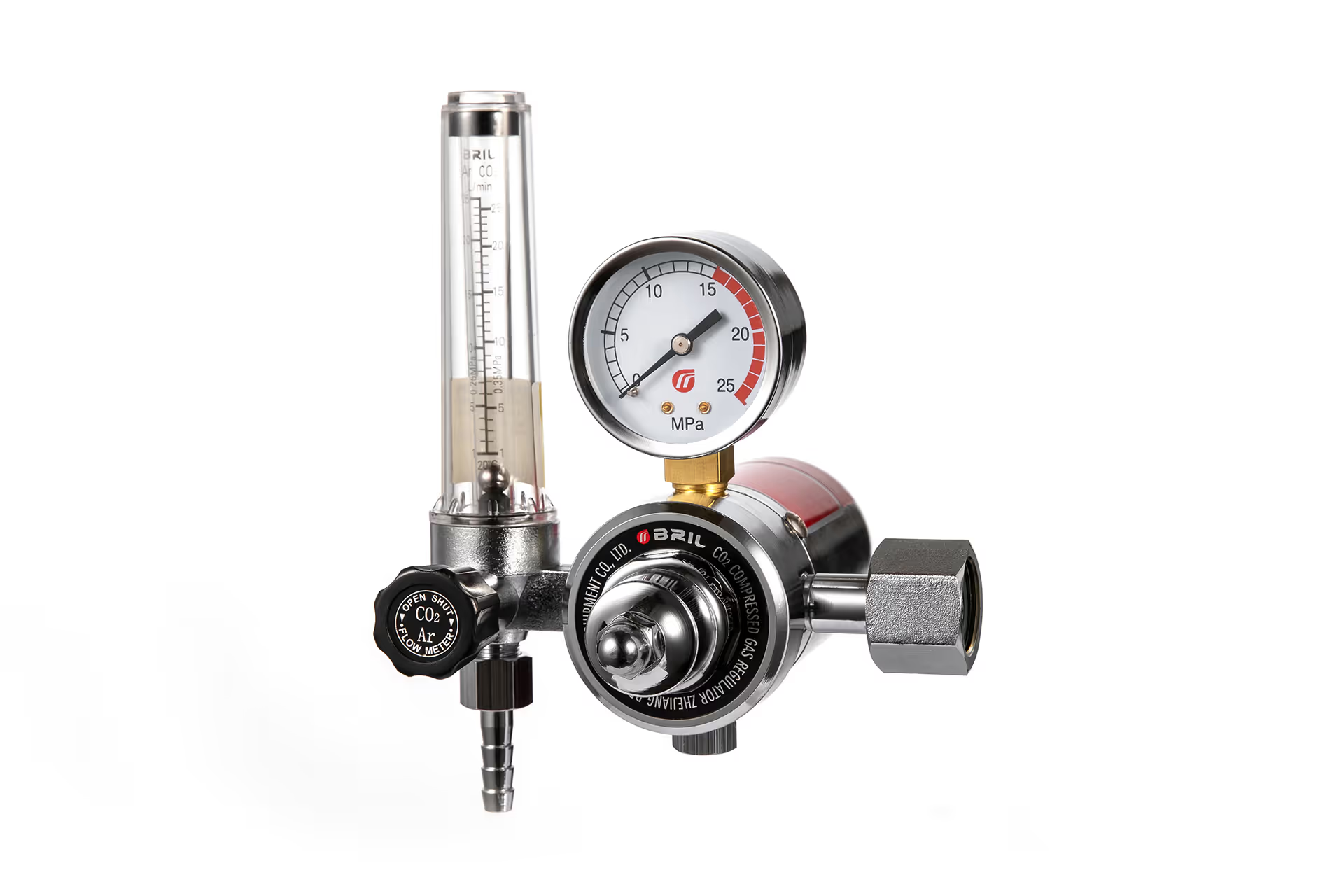
The supplied product portfolio includes CO₂ regulators, heated CO₂ regulators, argon regulators, oxygen regulators, acetylene regulators, propane regulators, nitrogen regulators, and dual-stage gas regulators.
This breadth makes Bril a candidate for distributors developing coordinated welding and industrial gas-control ranges. Its company profile also describes an established OEM supply business and names several equipment brands as customers; those relationships remain supplier-published claims rather than independently audited endorsements.
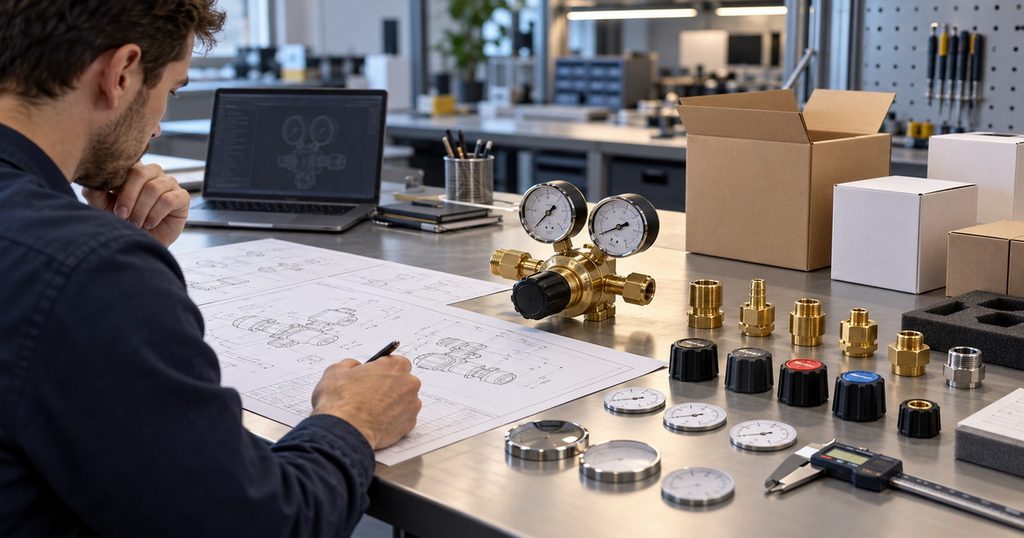
OEM/ODM Scope And Buyer Considerations
Bril’s factory-direct positioning is particularly relevant to smaller brands that need deeper product discussions rather than a standard reseller transaction. The useful areas to explore include:
– Gas-specific inlet and outlet configurations.
– Gauge ranges, units, and artwork.
– Product appearance and private-label packaging.
– Heated CO₂ regulator electrical configurations.
– Documentation and sample approval requirements.
Buyers should treat flexibility, communication efficiency, and development support as qualification criteria—not assume them from company size. A practical evaluation is to submit one detailed specification and assess whether the response identifies technical conflicts, separates standard options from new development, and provides a documented approval process.
Bril reports ISO 9001 certification and refers to CE and CNAS-related credentials. Obtain the actual documents, issuing bodies, scope, model coverage, and validity before approving a purchasing specification. Accreditation organizations and laboratories should not be confused with product-certification issuers.
2. Grupo INFRA
A Mexico-Based Supply Partner For Welding And Gas Procurement
– Founded: 1919.
– Base market: Mexico.
– Supplier type: Industrial and medical gas group with welding equipment distribution.
– Principal applications: Industrial gas supply, welding, cutting, and related workplace equipment.
INFRA is relevant when buyers want a Mexican commercial relationship covering both gases and equipment.
In June 2024, ESAB announced a distribution agreement with INFRA Group to expand the availability of its welding and gas-control equipment in Mexico. The announcement described INFRA as employing approximately 5,000 associates nationwide.
Core Strengths And OEM/ODM Limitations
INFRA’s distinguishing feature is its broad gas and welding supply role. This can suit purchasing teams that prefer to coordinate equipment selection with gas availability and local commercial support.
However, a distribution relationship does not prove that a regulator is manufactured in Mexico or that private-label production is available.
For OEM/ODM projects, ask INFRA to identify:
– The actual regulator manufacturer.
– Whether customization is factory-authorized.
– Which entity approves technical changes.
– Who holds warranty and product documentation responsibility.
The reviewed announcement supports distribution capability, not an open private-label regulator manufacturing program.
3. Harris Products Group
An Established Brand For Industrial Pressure Regulation
– Brand heritage: Since 1905.
– Markets: International, with a dedicated Mexican website and regulator catalog.
– Supplier type: Branded welding, cutting, and pressure-regulation equipment provider.
Harris is relevant to buyers seeking established catalog products rather than developing a new private-label regulator platform.
Its Mexican product information describes a complete industrial regulator range. The Model 801, for example, is presented as a single-stage, medium-duty regulator designed for a compact and durable configuration.
Core Strengths And Purchasing Fit
The principal procurement advantage is access to defined branded models. Buyers can start from published product configurations and compare them against the application rather than writing a complete design specification from scratch.
There is also evidence of Harris products in Mexican industrial gas sales channels: Linde México lists the Harris 25GX for inert gases including argon, helium, and nitrogen.
OEM/ODM Scope
The reviewed Mexican pages do not establish a general private-label or buyer-owned design program.
For branded procurement, confirm authorized distribution, exact model availability, connection configuration, and spare-parts support. For OEM projects, request written confirmation before assuming that standard Harris products can be relabeled or modified.
4. Victor, An ESAB Brand
A Strong Candidate For Branded Oxy-Fuel Equipment Programs
– Founded: 1913.
– Markets: International, including Mexico.
– Supplier type: Branded gas-regulation and oxy-fuel equipment manufacturer within ESAB’s portfolio.
Victor is relevant to fabrication, cutting, and maintenance buyers that prefer an established equipment platform.
ESAB’s Mexican website presents Victor’s regulator and gas-equipment offering. The company also provides an industrial regulator selection tool, which can help buyers identify suitable models before requesting local availability and pricing.
Core Strengths And Technical Differentiation
Victor’s EDGE 2.0 range illustrates why regulator comparisons should go beyond body material and gauge size.
ESAB describes design features including an impact-absorbing adjustment mechanism, a particle trap, and integrated gauge protection. These are product-family claims and must be checked against the exact model being purchased.
OEM/ODM Scope
Victor is primarily relevant here as a branded equipment option. The reviewed materials do not establish a public private-label manufacturing program for independent distributors.
Buyers should confirm the complete model number, gas service, inlet connection, operating range, and applicable warranty. Do not extend a warranty statement for one product family to every Victor regulator.
5. Linde México
A Local Channel For Industrial And Specialty Gas Regulators
– Corporate milestone: The modern Linde combination dates to the 2018 Linde–Praxair transaction.
– Local market: Mexico.
– Supplier type: Industrial gas supplier and equipment sales channel; not necessarily the manufacturer of each listed regulator.
Linde México is relevant to buyers procuring gas-control equipment alongside industrial or specialty gases.
Its Mexican store lists single-stage and two-stage regulators, including SC-280 and DC-280 models for specified pure, inert, and corrosive gas applications. The SC-280 product page identifies a chrome-plated brass construction and a 200-bar inlet pressure rating.
Core Strengths And OEM/ODM Scope
Linde’s value in this shortlist is application-oriented equipment access through a gas supplier.
Its catalog also distinguishes gas services. For example, a listed butane/propane regulator explicitly states that it must not be used with acetylene. This reinforces why apparently similar regulator bodies cannot be selected by appearance alone.
The reviewed sources support catalog supply, not an open private-label manufacturing program. Buyers requiring specialized equipment should clarify whether the request involves selecting an existing model, integrating a system, or commissioning new product development.
Supplier Comparison: Capacity, MOQ, And Certification Transparency
| Supplier | Main Purchasing Fit | Capacity Evidence | MOQ Evidence | Certification And Compliance Position |
|---|---|---|---|---|
| Zhejiang Bril | Factory-direct OEM and private-label evaluation | Company reports 200+ employees and 3,500+ m²; monthly units not published | Confirm by model and customization | Company reports ISO 9001 and other credentials; verify documents and model scope |
| Grupo INFRA | Mexican gas and welding supply coordination | Distribution scale reported; regulator factory output not established | Obtain local quotation | Request documentation for the actual manufacturer and model |
| Harris | Established branded industrial regulators | Mexico-specific output not published | Confirm with authorized sales channel | Review exact product documentation; do not infer certification from brand name |
| Victor / ESAB | Branded oxy-fuel and fabrication equipment | Mexico-specific regulator output not published | Confirm by model and distributor | Check model-specific technical, conformity, and warranty information |
| Linde México | Gas-linked industrial and specialty equipment | Regulator manufacturing output not established | Catalog and project requirements vary | Verify the manufacturer, product specification, and application suitability |
Technical Buying Guide: What A Reliable Regulator Specification Includes
Define Performance Before Comparing Prices
A useful request for quotation should identify:
– Gas composition and service.
– Maximum inlet pressure.
– Required outlet pressure range.
– Minimum, normal, and peak flow.
– Continuous or intermittent operation.
– Ambient temperature range.
– Exact inlet and outlet connection drawings.
– Installation orientation.
– Required documentation and destination market.
For welding cylinder regulators, ISO 2503 provides a relevant technical framework within its scope. Manifold regulators fall under a different standard, ISO 7291. Specifying the wrong standard can create an apparently complete but technically inappropriate compliance package.
Specify Materials Rather Than “High-Quality Brass”
“Brass body” is not a complete material specification.
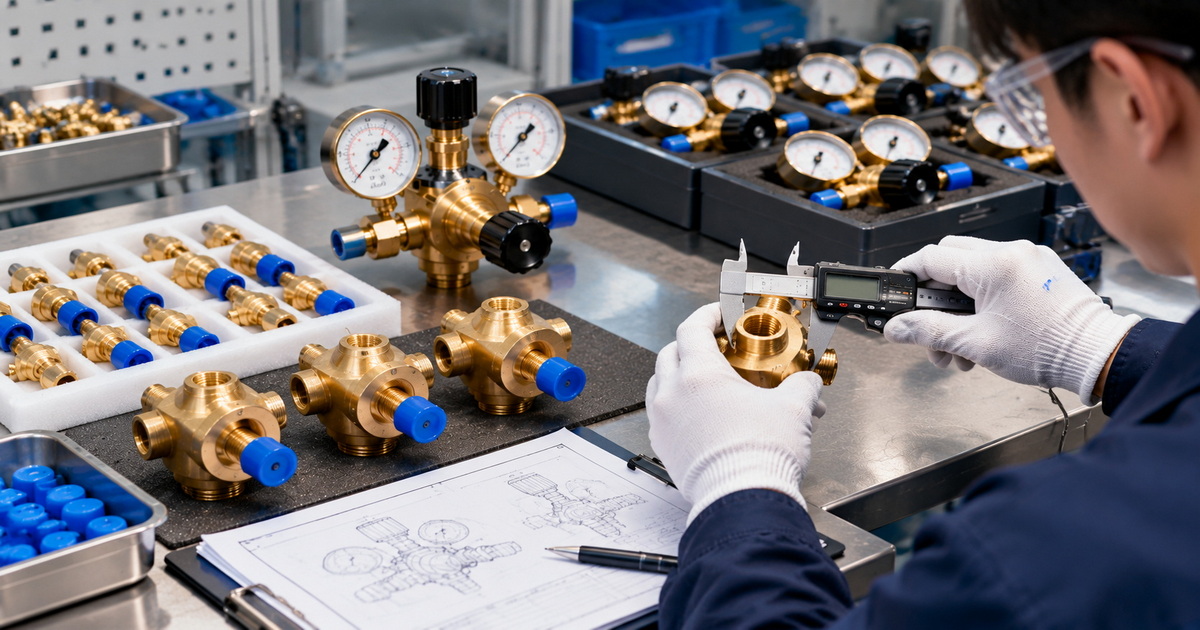
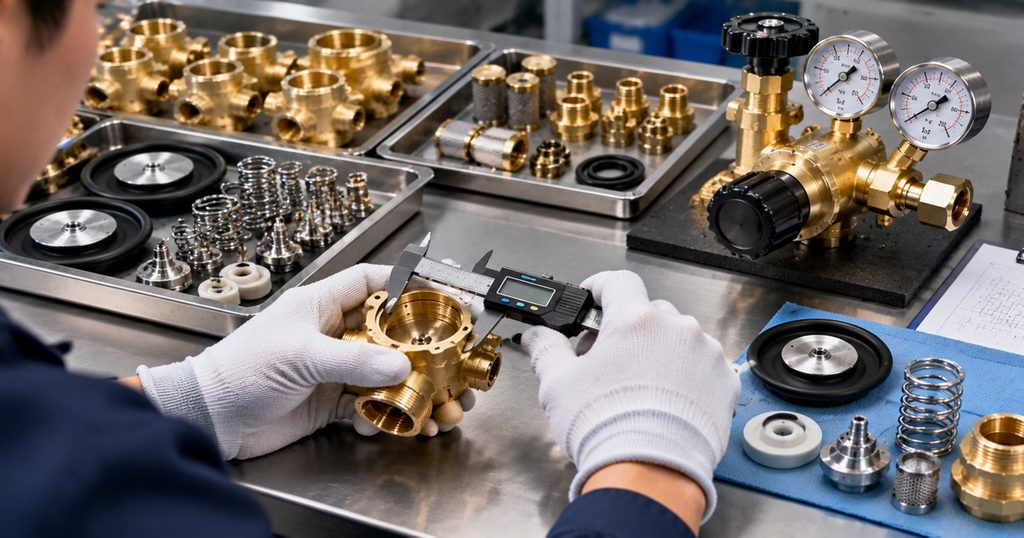
Request the alloy designation, manufacturing process, material certificate requirements, and inspection method. Also specify wetted seals, diaphragm materials, springs, and seat components.
Potential purchasing risks include an unapproved alloy substitution, a changed seal compound, or altered internal machining while the external appearance remains unchanged. Address these through an approved bill of materials and written change-control obligations.
For oxygen service, make cleanliness, compatible materials, protected packaging, and documented handling controls explicit acceptance requirements. A visually clean exterior is not sufficient purchasing evidence of internal cleanliness.
Separate Management Certification From Product Compliance
ISO 9001 addresses a quality-management system. It does not replace model-specific regulator performance evidence.
Likewise, CE marking is not a universal approval for every market or every regulator. Ask which legislation applies, which product configuration was assessed, and what conformity documentation supports the marking.
RoHS concerns electrical and electronic equipment. Its relevance deserves particular examination for heated CO₂ regulators, rather than being treated as an automatic requirement for every purely mechanical regulator.
For Mexico, require the importer or qualified local compliance adviser to confirm applicable requirements for the exact product and electrical configuration. European documentation alone does not settle Mexican market access.
The Often-Missed Procurement Trap: Testing Only At Full Cylinder Pressure
A polished sample can show the requested outlet pressure while revealing little about performance throughout cylinder depletion.
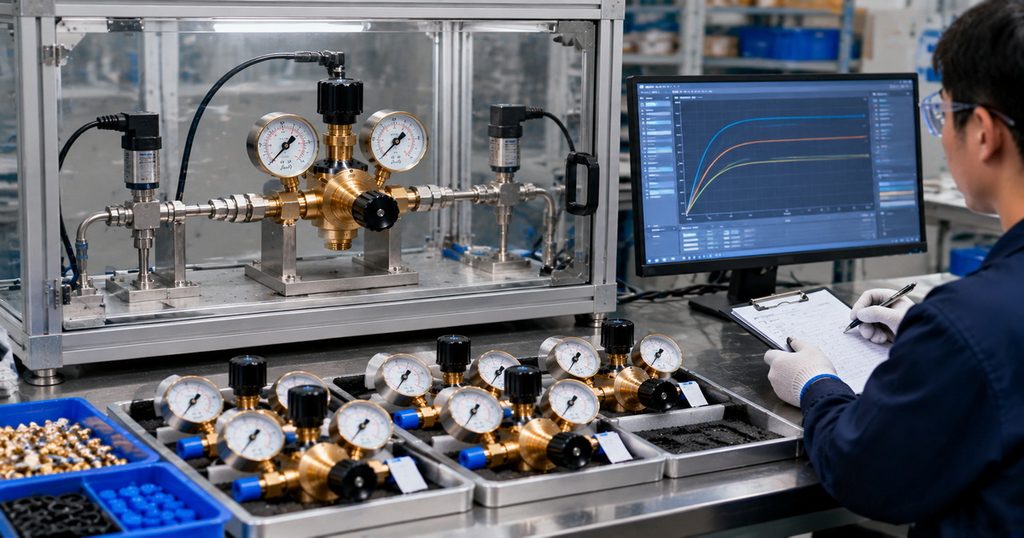
A more revealing acceptance plan examines regulator behavior across representative inlet pressures and operating flows. Buyers should ask for agreed limits and recorded results for:
1. Outlet pressure variation as inlet pressure changes.
2. Pressure droop as demand increases.
3. Lock-up pressure after downstream flow stops.
4. Pressure creep during an agreed hold period.
5. Repeatability after cycling.
This is especially important when comparing single-stage and dual-stage designs. Two gauges do not establish that a regulator has two reduction stages: the gauges may simply display inlet and outlet pressure.
The practical safeguard is to approve a performance envelope, not one pressure reading. Use the applicable regulator standard to structure the test agreement, and have pressure testing performed by qualified personnel using suitable equipment.
How To Qualify A Supplier And Approve Samples
Step 1: Verify The Legal And Manufacturing Entities
Match the quotation, beneficiary bank details, business registration, factory address, and certificate holder.
If purchasing through a distributor, record the manufacturer separately. Ask which party controls drawings, approves substitutions, and handles corrective action.
Step 2: Approve A Controlled Sample
Record the sample’s model, revision, configuration, markings, and approved test results.
Do not approve appearance alone. Include connection verification, agreed leakage and functional checks, gauge suitability, packaging, and instructions.
Step 3: Confirm Real Production Availability
Instead of accepting “large capacity,” request:
– Available output for the selected configuration.
– Material and critical-component lead times.
– Reserved production and inspection dates.
– Recent on-time delivery evidence.
– Arrangements for repeat orders and service parts.
A company-wide capacity statement does not establish capacity for a specific heated CO₂ regulator or dual-stage model.
Step 4: Lock The Production Specification
Attach the approved drawing, bill of materials, marking requirements, test plan, and packaging specification to the purchase agreement.
Require written approval before changing critical suppliers, sealing materials, internal geometry, or manufacturing location.
Step 5: Clarify Logistics And Import Responsibility
Agree on the Incoterm, importer of record, customs classification, origin documentation, and responsibility for destination compliance.
Do not assume that purchasing through Mexico creates Mexican origin. Preferential treatment depends on the applicable origin rules and supporting documentation, not the seller’s address.
For regulators shipped without gas, describe the goods accurately and confirm carrier requirements. Cylinder packages, residual gas, and electrical accessories can change the shipping review.
Conclusion: Choose The Supply Model Before Choosing The Supplier
The right shortlist depends on the purchasing objective.
Bril merits evaluation when the priority is factory-direct OEM development and a private-label product range. INFRA and Linde México offer local gas-linked procurement routes. Harris and Victor provide established branded regulator options through Mexican-market channels.
Before comparing final prices, issue one common specification to each candidate. Require the same performance evidence, documentation, delivery assumptions, and warranty responsibilities.
For a Bril OEM inquiry, submit the gas service, inlet pressure, outlet range, flow requirements, connection drawings, branding needs, and forecast volume. Request a feasibility review, itemized quotation, sample plan, and model-specific documentation before committing to production.
FAQ
1. How Can I Verify Whether A Supplier’s ISO Certificate Has Expired?
Search the legal company name or certificate number in IAF CertSearch. Compare the certified entity, location, standard, scope, issuing certification body, and current status.
Check for active, suspended, withdrawn, or expired status rather than relying solely on the date printed on a PDF. If a record cannot be found, investigate with the issuing certification body instead of immediately assuming fraud.
2. How Can I Prove A Regulator Is Dual-Stage Rather Than Simply Dual-Gauge?
Request a sectional drawing or technical description showing two sequential pressure-reduction mechanisms.
Then require performance evidence across representative inlet pressures. Gauge count alone is not proof of internal stage count; purchasing approval should connect the design description with measured performance.
3. Can One Regulator Model Cover Oxygen, Argon, CO₂, Propane, And Acetylene?
Do not approve interchangeability based on a shared body shape.
Gas suitability depends on the complete configuration, including connections, materials, sealing components, pressure range, and cleanliness controls. Linde México’s catalog explicitly warns that one listed butane/propane regulator must not be used with acetylene. Require written approval for every intended gas service.
4. What Should I Do If Samples Pass But A Production Batch Performs Differently?
Quarantine the affected batch and compare it against the approved revision, material records, component lots, assembly records, and test results.
Require documented root-cause analysis and verification of corrective action. The purchasing agreement should define responsibility for retesting, replacement, freight, and any necessary containment measures.
5. What Documents Should I Request For A Heated CO₂ Regulator?
Request the mechanical regulator specification plus the heater’s rated voltage, frequency, power, wiring information, protection arrangements, and operating instructions.
Also require a documented assessment of applicable destination-market electrical and product requirements. A mechanical regulator test report does not establish electrical conformity, and a general RoHS statement does not establish complete product safety.
References
1. – Zhejiang Bril Welding Equipment Co., Ltd., company profile: founding year, facilities, reported markets, OEM activities, and certification claims. [chinesewelding]
2. – Secretaría de Economía, Data México, “Válvulas Reductoras de Presión”: HS 848110 trade values, exporting states, and destination markets; includes the noted inconsistency in July 2026 figures. [economia.gob]
3. – ESAB Corporation, June 4, 2024, distribution agreement with INFRA Group: Mexican distribution relationship, INFRA history, and reported workforce. [investors.esabcorporation]
4. – Harris Products Group, Mexico website and industrial regulator catalog. [harrisproductsgroup]
5. – Harris Products Group, Model 801 product information. [harrisproductsgroup]
6. – ESAB Mexico, Victor brand and warranty information; ESAB brand history identifies Victor’s 1913 founding. [esab]
7. – ESAB, gas-equipment technical information and industrial regulator selection resources. [esab]
8. – Linde México, specialty gas regulator catalog and SC-280 specifications. [linde]
9. – Linde México, inert-gas and butane/propane regulator listings. [linde]
10. – Linde regulatory filing, discussion of the 2018 business combination. [sec]
11. – ISO 2503:2009, cylinder-mounted welding regulator requirements; reviewed and confirmed in 2026. [iso]
12. – ISO 7291:2010, manifold regulator requirements and test methods. [iso]
13. – IAF CertSearch, certificate verification procedures and certification status guidance. [iafcertsearch]
14. – European Union, Directive 2011/65/EU, restrictions on hazardous substances in electrical and electronic equipment. [eur-lex.europa]
Hot Tags: Gas Pressure Reducing Regulator, Gas Regulator Manufacturers In Mexico, Industrial Gas Regulator Suppliers, OEM Gas Pressure Regulators, CO₂ Welding Regulator, Heated CO₂ Regulator, Dual Stage Gas Regulator, Oxygen And Acetylene Regulators, Argon Gas Regulator, Nitrogen Pressure Regulator