Content Menu
● How Heated and Non-Heated CO₂ Regulators Work
>> What Is a Non-Heated CO₂ Regulator?
>> What Is a Heated CO₂ Regulator?
● Heated CO₂ Regulator vs Non-Heated CO₂ Regulator: Comparison Table
>> Cylinder Cooling and Regulator Cooling Are Different
>> External Frost Does Not Prove Internal Failure
● When a Heated CO₂ Regulator Is the Better Choice
>> Sustained Welding and Automated Production
>> Cold Workshops and Exposed Installations
>> Processes Where Interruptions Are Expensive
● When a Non-Heated CO₂ Regulator Is Enough
>> Applications Within Validated Thermal Capacity
● Three Selection Insights Buyers Often Miss
>> 1. There Is No Universal Flow Threshold for Heating
>> 2. Two Gauges Do Not Mean Two-Stage Regulation
>> 3. Flow Units and Calibration Must Match
● A Practical Five-Step Selection and Acceptance Process
>> Step 2: Define Actual Demand
>> Step 3: Verify Supply Capacity
>> Step 4: Confirm Mechanical and Electrical Compatibility
>> Step 5: Agree on an Acceptance Test
● Cost Comparison: Evaluate Downtime, Not Just Purchase Price
● Materials, Quality Inspection, and OEM Requirements
>> Brass Quality Matters, but It Is Not the Whole Specification
>> Specify Evidence, Not Broad Compliance Claims
>> Match Customization to the Application
● Safe Installation and Operation
● Specify the Right CO₂ Regulator for Your Project
>> 1.Does Every CO₂ Welding Regulator Need a Heater?
>> 2.Will a Heated Regulator Increase Cylinder Withdrawal Capacity?
>> 3.Can a Heated CO₂ Regulator Still Freeze?
>> 4.Is a Two-Stage CO₂ Regulator Better Than a Heated One?
>> 5.Can I Use an Argon Regulator for CO₂?
>> 6.Can I Add an External Heater to an Existing Regulator?
A heated CO₂ regulator is usually the better choice for sustained gas withdrawal when expansion cooling threatens reliable delivery. A non-heated CO₂ regulator is often sufficient for intermittent welding and applications operating comfortably within the regulator’s validated flow capacity.
However, choosing a heated CO₂ regulator vs non-heated CO₂ regulator requires more than comparing price or looking for frost. Cylinder withdrawal capacity, ambient temperature, operating pressure, and duty cycle all influence performance.
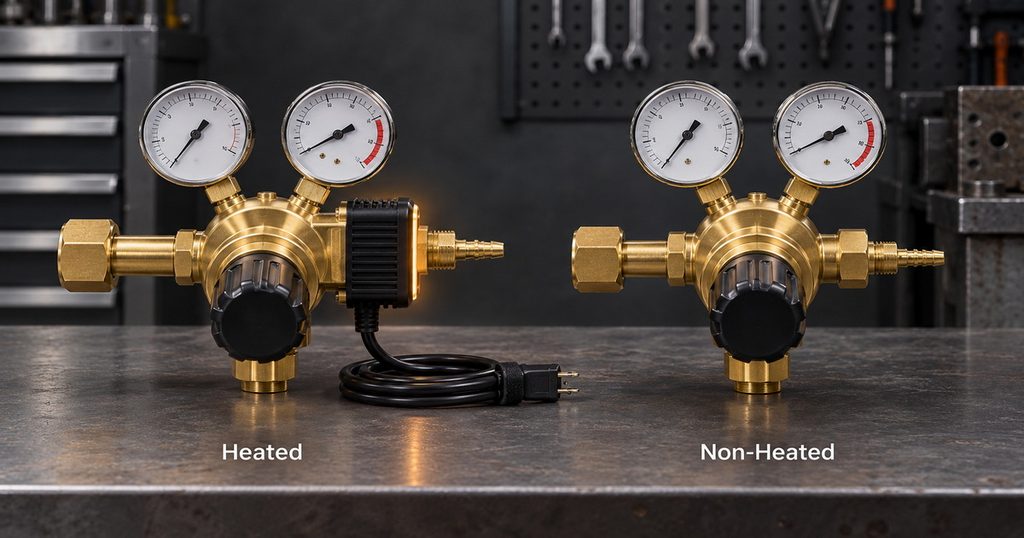
How Heated and Non-Heated CO₂ Regulators Work
Both types reduce supply pressure to a usable downstream pressure. Their main difference is how they manage the cooling associated with pressure reduction.
What Is a Non-Heated CO₂ Regulator?
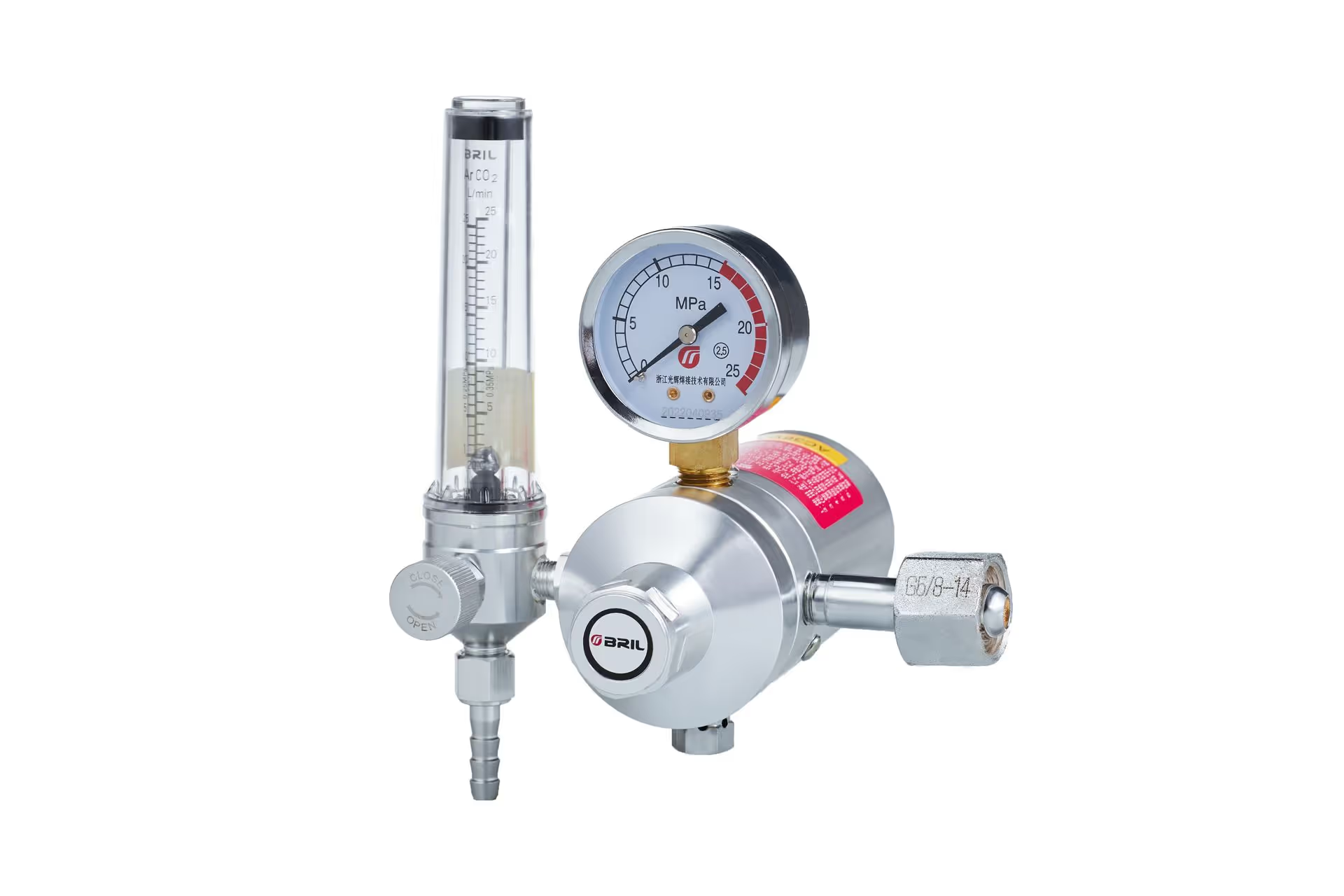
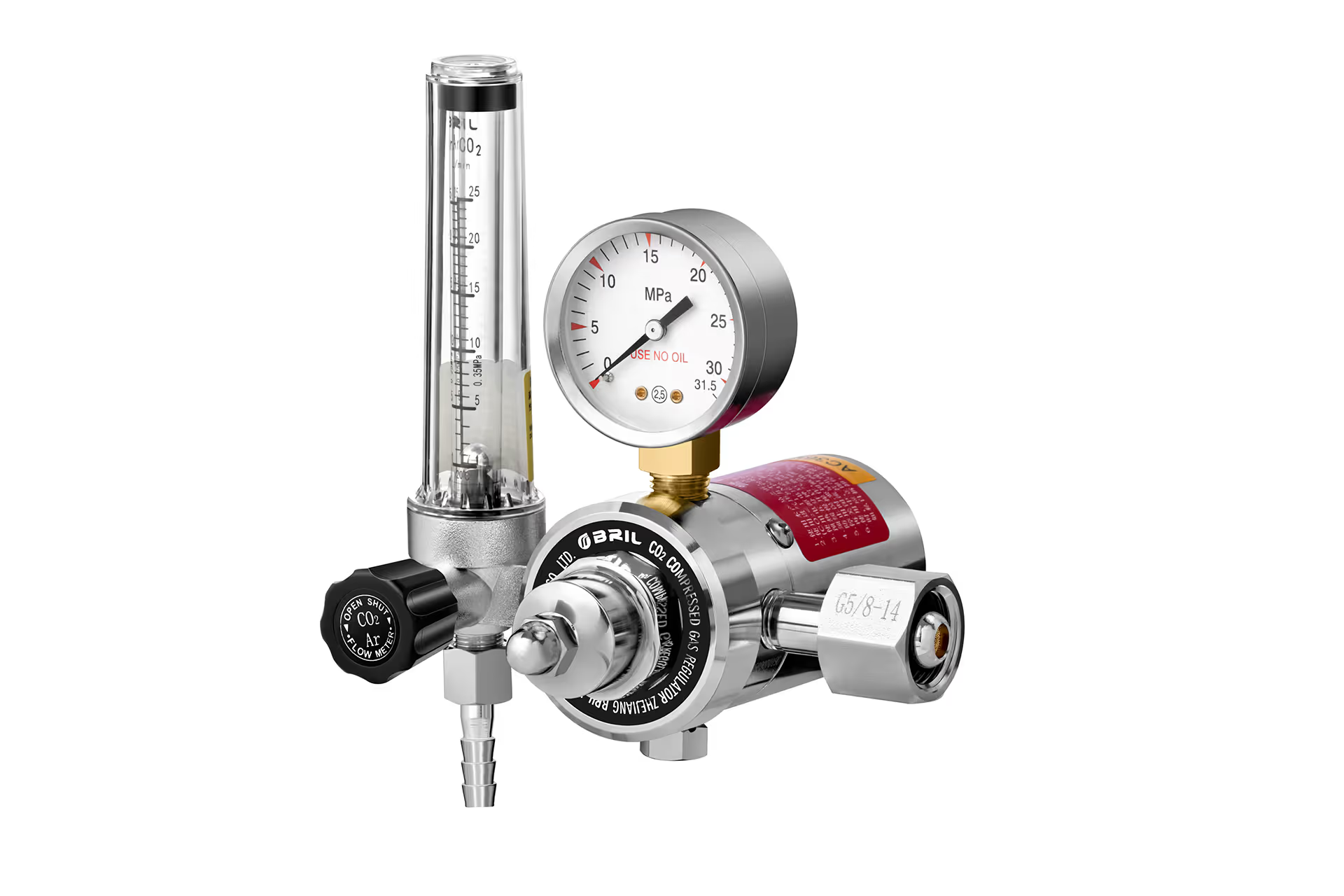
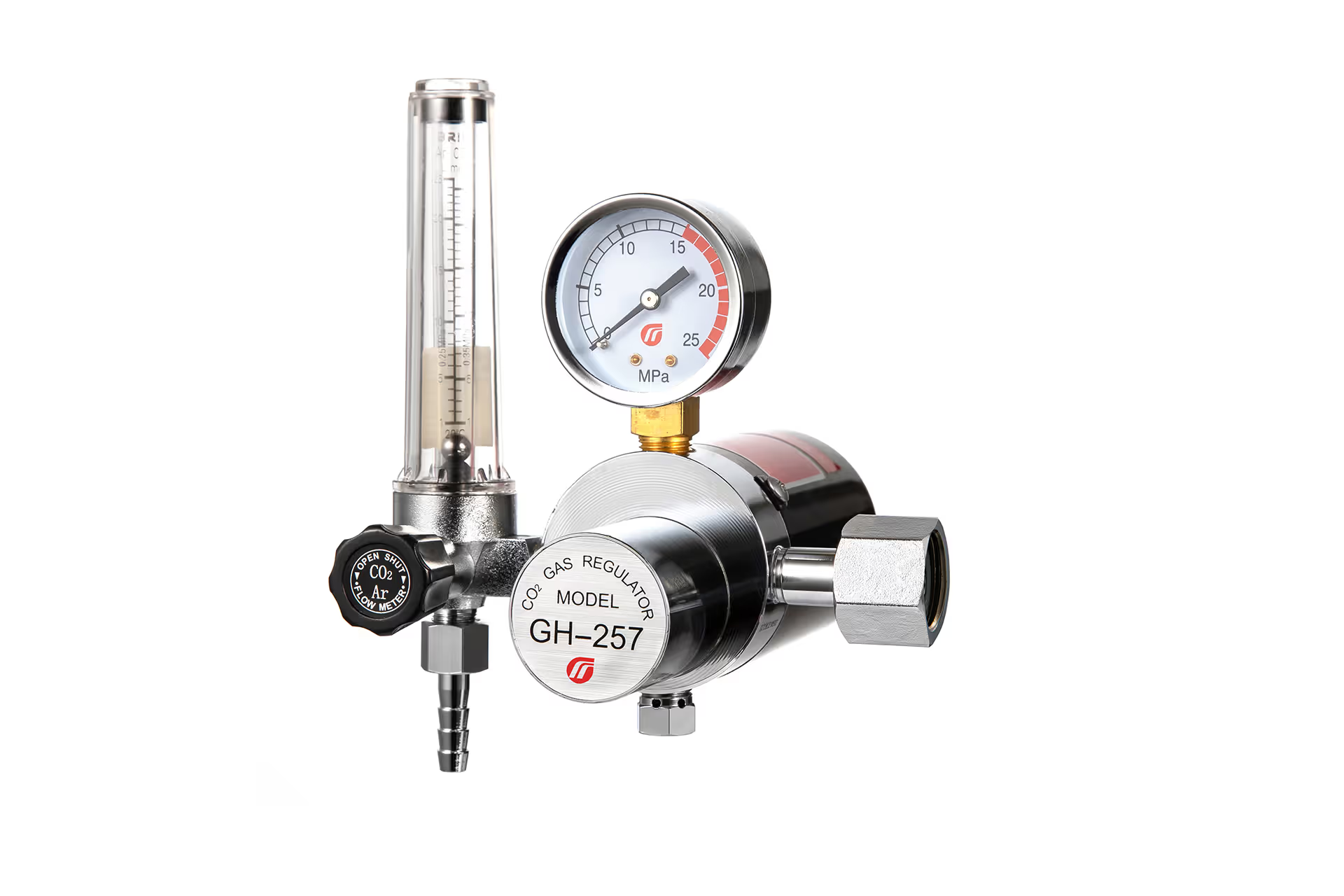
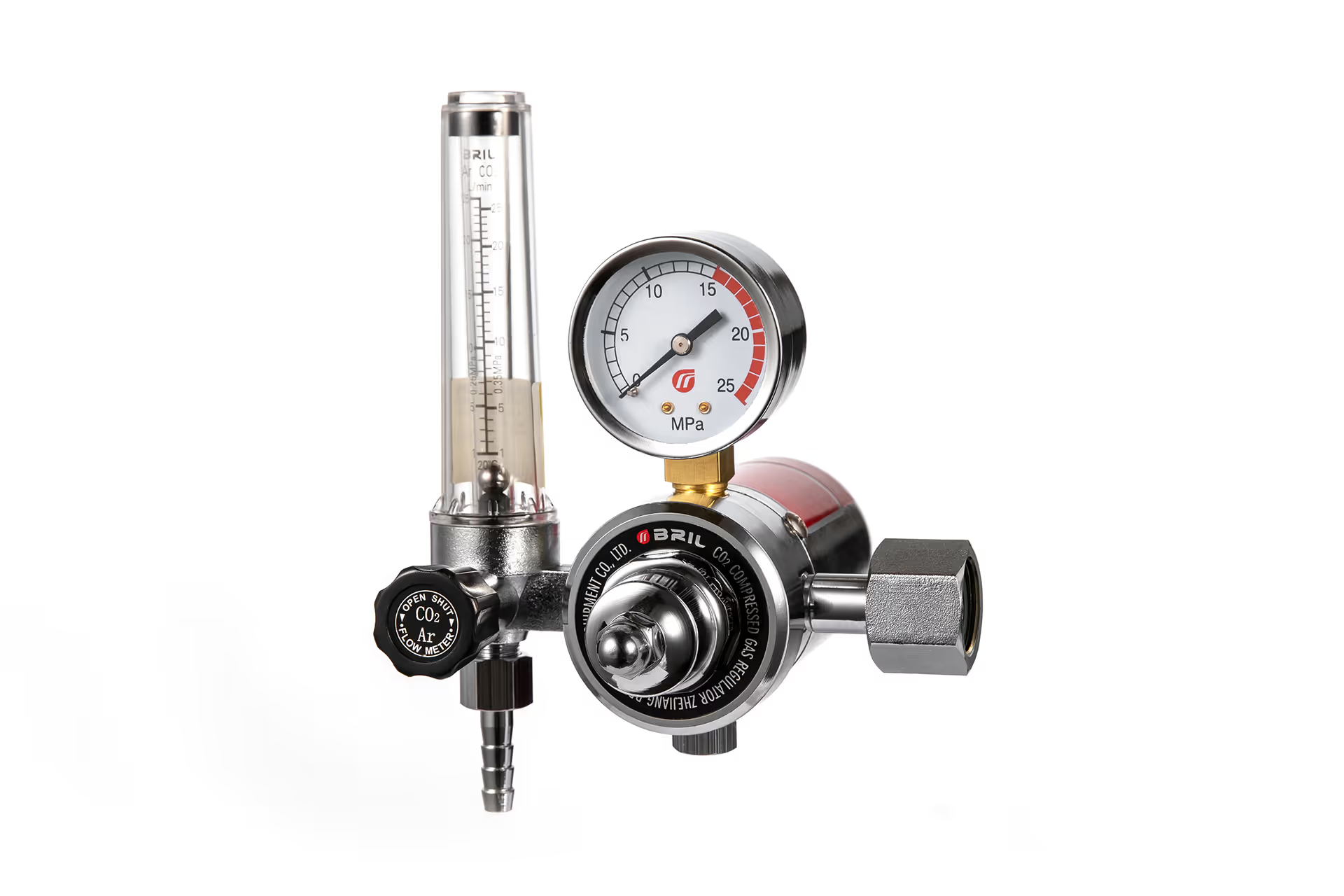
A non-heated CO₂ regulator uses a mechanical pressure-reducing mechanism without an integrated electrical heater.
Common configurations include an inlet pressure gauge, an outlet pressure gauge or flow indication, and an adjustment mechanism. Depending on the design, flow control may require a separate valve or flowmeter.
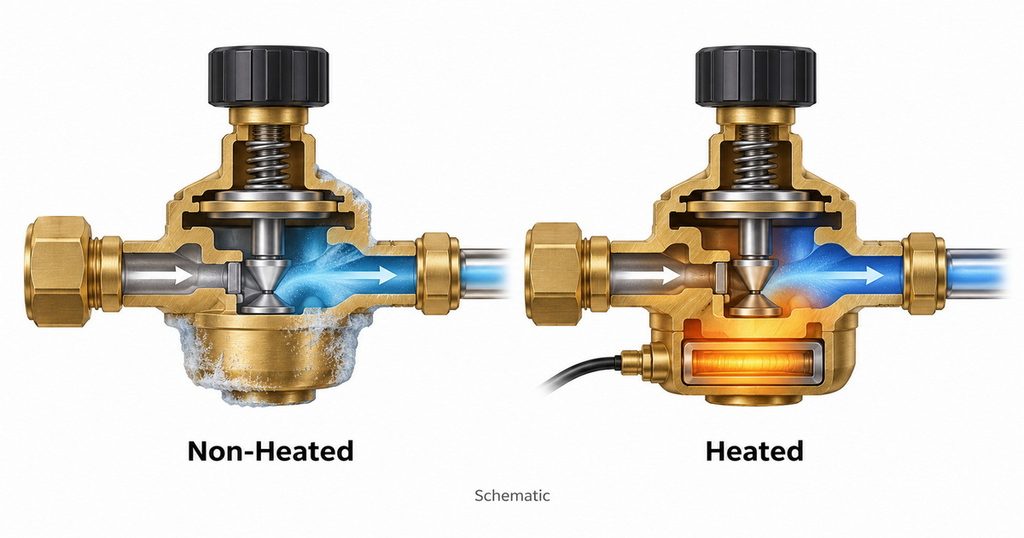
Without electrical heating, the regulator depends on its thermal mass and heat transfer from the surroundings to offset cooling.
This simpler arrangement can work well for suitable welding and industrial applications. However, its usable capacity depends on operating conditions—not just the maximum number printed on a flow scale.
What Is a Heated CO₂ Regulator?
A heated CO₂ regulator adds controlled heat to reduce the likelihood of freeze-related restriction during gas expansion.
Some designs integrate the heater into the regulator. Others use a separate, manufacturer-approved upstream gas heater.
Heater voltage, wattage, temperature control, and electrical protection vary by model. A heated regulator therefore requires both gas-system compatibility and a suitable electrical supply.
Importantly, heating does not automatically provide more accurate pressure regulation. It addresses a thermal problem; pressure-control performance still depends on the regulator’s mechanical design.
Heated CO₂ Regulator vs Non-Heated CO₂ Regulator: Comparison Table
| Selection factor | Heated CO₂ regulator | Non-heated CO₂ regulator |
|---|---|---|
| Cooling management | Adds heat to counter expansion cooling | Relies on surrounding heat and regulator design |
| Typical application fit | Sustained withdrawal with demonstrated freezing risk | Intermittent or thermally manageable service |
| Electrical supply | Required for heater operation | Not required |
| Purchase cost | Generally higher for comparable specifications | Generally lower |
| Maintenance scope | Mechanical components plus heater and wiring | Primarily mechanical components |
| Cold-environment suitability | Often advantageous within specified limits | Must be verified carefully |
| Pressure stability | Depends on regulation design and thermal conditions | Depends on regulation design and thermal conditions |
| Cylinder withdrawal limit | Does not remove the cylinder’s limitation | Does not remove the cylinder’s limitation |
| Main purchasing priority | Verified thermal performance and electrical suitability | Verified continuous-flow performance |
Neither category is universally superior. The right choice depends on the complete gas supply system.
Why CO₂ Regulators Freeze
Understanding where cooling occurs helps prevent an expensive but ineffective equipment upgrade.
Cylinder Cooling and Regulator Cooling Are Different
A typical CO₂ cylinder contains liquid and vapor. As gas is withdrawn, more liquid evaporates, absorbing heat and cooling the cylinder.
A second cooling process occurs when gas expands through the regulator. This temperature reduction can produce external frost and, under unfavorable conditions, internal restrictions.
A regulator heater helps address cooling around pressure reduction. It does not automatically give the cylinder enough thermal capacity to vaporize additional CO₂.
If cylinder withdrawal is the bottleneck, the solution may involve a supplier-designed manifold, a different supply arrangement, or appropriately sized vaporization equipment.
External Frost Does Not Prove Internal Failure
Moisture in the surrounding air can freeze on a cold regulator body. Light external frost alone does not establish that the regulator has failed.
More consequential symptoms include:
– Falling delivery pressure during sustained use.
– Unstable outlet pressure or flow.
– Inability to maintain the required gas supply.
– Repeated interruption after prolonged operation.
Evaluate these symptoms against the manufacturer’s instructions. Persistent instability should trigger a system assessment rather than repeated adjustment of the pressure knob.
When a Heated CO₂ Regulator Is the Better Choice
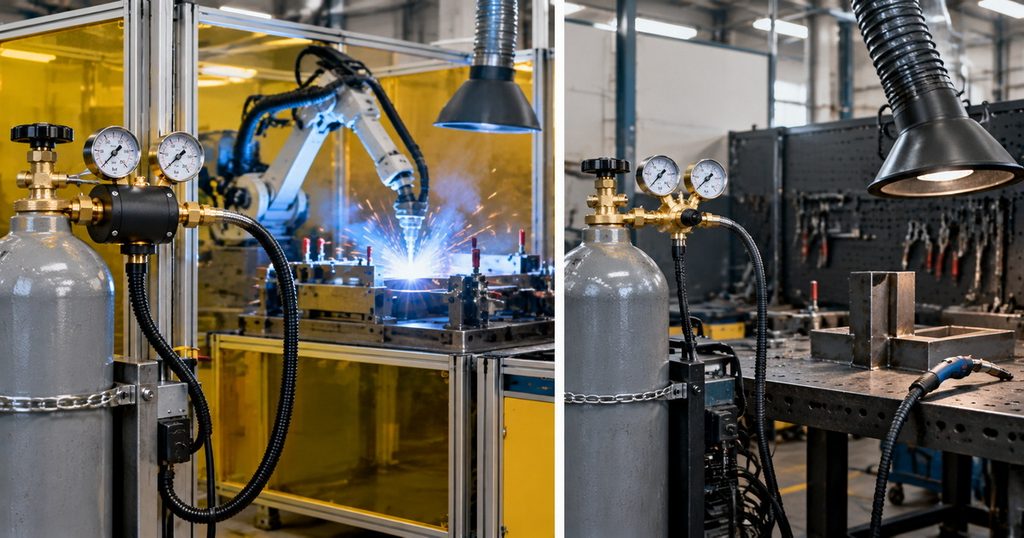
Sustained Welding and Automated Production
Long welding cycles and repeated operation with limited recovery time can create a sustained thermal load.
A heated CO₂ regulator for welding becomes worth considering when an otherwise correctly specified system develops freeze-related delivery problems during production.
For automated equipment, evaluate the longest continuous operating cycle—not only average daily consumption. A system may perform normally during brief setup checks but struggle during extended operation.
Cold Workshops and Exposed Installations
Lower ambient temperatures reduce the heat available from the surroundings.
If equipment operates in an unheated workshop or exposed location, ask for performance information at the lowest expected temperature.
Do not assume that an electrically heated regulator is suitable for outdoor exposure. Moisture protection, cable integrity, electrical supply, and the manufacturer’s installation restrictions remain separate requirements.
Processes Where Interruptions Are Expensive
Heating may be economically justified when verified freeze-related interruptions cause substantial downtime.
Nevertheless, the heater must address the actual failure mechanism. It cannot correct an undersized hose, insufficient cylinder supply, incompatible flowmeter, or defective pressure-control component.
When a Non-Heated CO₂ Regulator Is Enough
Intermittent Welding
For short welding runs with recovery periods, a correctly sized non-heated CO₂ regulator can provide satisfactory service.
It avoids the need for a nearby power source and eliminates heater-related electrical components.
Selection should still reflect the longest expected run and the coldest normal working conditions.
Applications Within Validated Thermal Capacity
A non-heated regulator may also suit continuous operation when its design and operating conditions support the required delivery.
For example, published product information lists a non-heated Harris Model 330 CO₂ configuration with flow measurement up to 100 SCFH. A separate heated Harris Model 715 configuration is also listed up to 100 SCFH.
These examples do not establish interchangeable performance. They demonstrate why a product’s heated or non-heated label cannot replace model-specific application data.
Three Selection Insights Buyers Often Miss
1. There Is No Universal Flow Threshold for Heating
Avoid rules such as “every CO₂ regulator above a certain flow requires heating.”
Thermal performance changes with:
– Inlet and outlet pressures.
– Gas supply configuration.
– Ambient temperature.
– Continuous operating duration.
– Regulator geometry and heat transfer.
– Available cylinder withdrawal capacity.
Even identical flow readings can represent different operating demands under different conditions.
Ask suppliers to state the conditions behind their continuous-flow claims.
2. Two Gauges Do Not Mean Two-Stage Regulation
A regulator with two gauges may still use a single pressure-reduction stage.
A two-stage regulator reduces pressure in two steps, helping limit delivery-pressure changes associated with changing inlet pressure.
Heating and staging solve different problems. Heating manages cooling; two-stage regulation manages the influence of supply-pressure variation.
Neither feature replaces the need to check flow capacity, pressure droop under load, and application suitability.
3. Flow Units and Calibration Must Match
Do not compare L/min, SCFH, and other flow figures without checking their reference conditions.
Also confirm that the flowmeter is calibrated for CO₂ and intended for the specified operating pressure.
A scale designed for another gas may not indicate CO₂ flow correctly without the manufacturer’s correction method. Accurate-looking numbers are not useful if the measurement basis is wrong.
A Practical Five-Step Selection and Acceptance Process
Step 1: Define the Supply
Record the gas, cylinder or vessel type, maximum inlet pressure, and whether the connection supplies vapor or liquid.
For ordinary vapor-service regulators, do not assume compatibility with liquid withdrawal or a siphon-tube cylinder.
Step 2: Define Actual Demand
Specify required outlet pressure, operating flow, longest continuous run, and simultaneous users.
For multiple stations, estimate realistic overlapping demand rather than using only one workstation’s consumption.
Step 3: Verify Supply Capacity
Ask the gas supplier whether the cylinder or vessel arrangement can sustain the required withdrawal under expected conditions.
This check should precede treating a heated regulator as the complete solution.
Step 4: Confirm Mechanical and Electrical Compatibility
Verify:
– Gas-specific inlet connection.
– Outlet thread and hose compatibility.
– Pressure and flow ranges.
– Ambient operating limits.
– Heater voltage, frequency, and wattage where applicable.
– Required electrical and product documentation.
A plug adapter does not convert an incompatible heater voltage.
Step 5: Agree on an Acceptance Test
For important production applications, request testing that represents actual service.
Record inlet pressure, ambient temperature, outlet pressure, measured flow, operating duration, and any pressure instability.
Agree on acceptable limits before placing a production order. This creates a more useful purchasing standard than asking whether the regulator is “heavy duty.”
Cost Comparison: Evaluate Downtime, Not Just Purchase Price
A non-heated CO₂ regulator generally offers a lower initial cost and simpler installation.
A heated model adds electrical consumption and potentially additional inspection or replacement requirements. Its value depends on whether it prevents a verified operating problem.
Consider this illustrative calculation—not a measured industry result:
– Heated-model price premium: $90.
– Cost per production interruption: $45.
– Avoidable interruptions: two per month.
Under those assumptions, one month of avoided interruptions offsets the premium, before electricity and maintenance costs.
If the interruptions actually originate in inadequate cylinder withdrawal, however, this calculation does not justify a regulator heater. Diagnose first, then calculate the return.
Materials, Quality Inspection, and OEM Requirements
Brass Quality Matters, but It Is Not the Whole Specification
Brass bodies are common in industrial CO₂ regulators, but body material alone does not establish performance.
Seat materials, diaphragm design, machining quality, cleanliness, sealing, and assembly consistency also deserve attention.
Ask the supplier to explain material specifications and inspection methods rather than relying on terms such as “premium brass.”
Specify Evidence, Not Broad Compliance Claims
For overseas brands and distributors, request documentation relevant to the exact model and destination market.
Useful records may include:
– Gas-service and pressure ratings.
– Leakage and functional test criteria.
– Flow-performance information.
– Heater electrical specifications.
– Applicable conformity documents.
– Product identification and traceability.
– Installation and maintenance instructions.
A component approval or an unrelated certificate does not automatically establish conformity of the complete assembly.
Match Customization to the Application
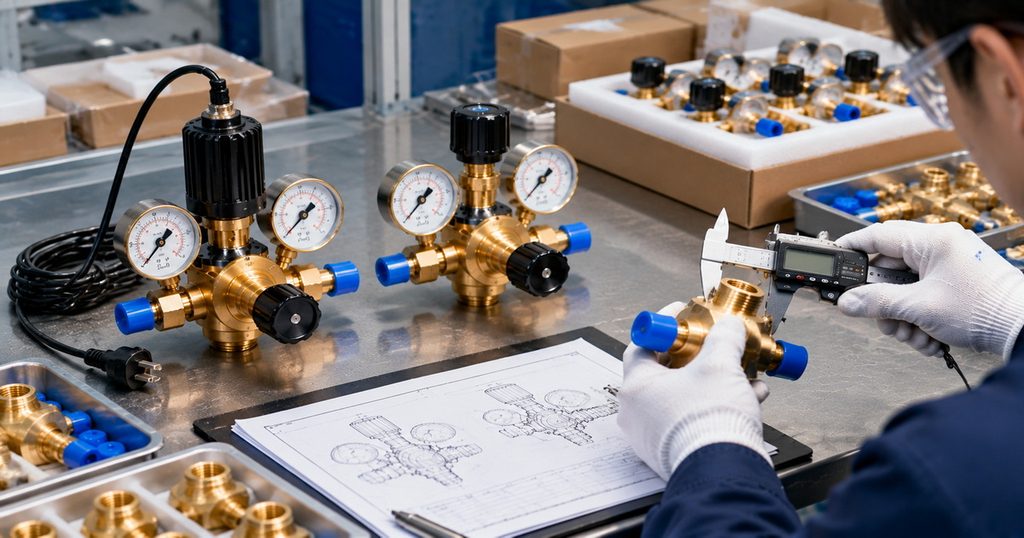
OEM and ODM requirements can cover connections, gauges, flow ranges, heater supplies, branding, packaging, and instructions.
Start with operating requirements before appearance. A customized faceplate cannot compensate for an incorrect pressure range or unsuitable connection.
Safe Installation and Operation
Follow the regulator manufacturer’s instructions and applicable workplace requirements.
Secure cylinders as required, provide appropriate ventilation, inspect connections and electrical cables, and use a suitable approved leak-detection method.
Never use an open flame or an improvised heater to thaw equipment. Do not bypass thermal protection or modify electrical components.
If delivery becomes unstable, stop the process safely and arrange inspection by qualified personnel. Depressurize and isolate equipment according to the approved procedure before removal or servicing.
Specify the Right CO₂ Regulator for Your Project
Choose a non-heated regulator when validated performance meets your operating conditions without supplemental heat.
Choose a heated model when freeze-related pressure reduction is a demonstrated risk and the supply system can support the required withdrawal.
As a manufacturer and supplier of industrial gas regulators, we support OEM and ODM projects for overseas brands, wholesalers, distributors, and equipment manufacturers.
Send your gas supply details, required pressure and flow, operating temperature, duty cycle, connection standard, destination market, and available voltage. Request a model recommendation and application-specific quotation based on those requirements.
Frequently Asked Questions
1.Does Every CO₂ Welding Regulator Need a Heater?
No. Heating depends on the regulator design, supply conditions, ambient temperature, and operating cycle. Many suitable applications operate successfully without electrical heating.
2.Will a Heated Regulator Increase Cylinder Withdrawal Capacity?
Not by itself. Regulator heating addresses local expansion cooling. Cylinder vaporization capacity remains a separate supply limitation.
3.Can a Heated CO₂ Regulator Still Freeze?
Yes. Incorrect voltage, heater failure, excessive demand, unsuitable conditions, or supply problems can still cause difficulty. Heating is not an unlimited-capacity guarantee.
4.Is a Two-Stage CO₂ Regulator Better Than a Heated One?
They are not direct alternatives. Two-stage regulation addresses inlet-pressure influence; heating addresses cooling. Some applications may benefit from both features.
5.Can I Use an Argon Regulator for CO₂?
Only when the manufacturer explicitly approves that model for CO₂ service and the connections, pressure ratings, and flow indication are suitable. Physical fit alone is insufficient.
6.Can I Add an External Heater to an Existing Regulator?
Only use a compatible, manufacturer-approved arrangement. Do not attach an improvised heater or modify the regulator body.
References
1. [Gascon — CO₂ and Freezing Issues Explained]. Technical guidance distinguishing cylinder withdrawal limitations from regulator expansion cooling, with discussion of icing symptoms and supply-system considerations. [gascon.com]
2. [Airgas — Harris Model 715-100-SCFH Electrically Heated CO₂ Regulator]. Product information describing gaseous CO₂ withdrawal, a 200-watt heater, electrical configurations, and flow control up to 100 SCFH. Specifications apply to the listed model, not all heated regulators. [airgas]
3. [Airgas — Harris Model 330-CD-100SCFH-CGA320 CO₂ Regulator]. Product specifications supporting the non-heated model example, including CO₂ service, brass construction, and flow measurement up to 100 SCFH. [airgas]
4. [Harris Products Group — Two-Stage Regulators]. Manufacturer explanation of two-step pressure reduction and reduced sensitivity to changes in cylinder pressure. [harrisproductsgroup]
5. [Occupational Safety and Health Administration — 29 CFR 1910.101: Compressed Gases]. General workplace requirements for compressed-gas handling, storage, and utilization. [osha]
6. [Occupational Safety and Health Administration — 29 CFR 1926.353: Ventilation and Protection in Welding, Cutting, and Heating]. Construction-sector ventilation and exposure-control requirements; applicability depends on the workplace and activity. [osha]
Hot Tags: Heated CO₂ Regulator, Non-Heated CO₂ Regulator, CO₂ Welding Regulator, CO₂ Gas Pressure Regulator, Industrial CO₂ Regulator, CO₂ Regulator Manufacturer, CO₂ Regulator Supplier, OEM CO₂ Regulator, Two-Stage CO₂ Regulator, Brass CO₂ Regulator